
Thomas Cole Course Of Empire
Thomas Cole Course Of Empire - Thomas cole’s course of the empire series explores civilization’s cycle of growth and decay through nature’s resilience and human impact—a powerful message on society’s impact on landscapes. The cultural and thematic content of the paintings suggest that cole was especially attuned to the ancient greek philosophical concept of kyklos. Examine the rise and fall of “progress” as an ideology, and see how the “civilizing” project that. The 1830s were an optimistic time in america. Here, cole places it in the center of the composition, surrounded by storm clouds. Thomas cole regarded the american landscape as being what he called the undefiled work of gods. World's largest selectionwe have everything>80% items are new It was a message delivered with earnest intent to the citizens of the young and ravenous american republic, and is hardly less relevant today. 39 1/4 × 63 1/4 in. From wild beginnings to epic downfalls, thomas cole’s 'the course of empire' series mirrors the rise and fall of a civilization. The resulting series charts the course of an imaginative empire as it appears in the midst of wilderness, expands into a glistening metropolis, and collapses into ruin. What was the course of empire by thomas cole about? The cultural and thematic content of the paintings suggest that cole was especially attuned to the ancient greek philosophical concept of kyklos. The series depicts the growth and fall of an imaginary city, situated on the lower end of a river valley, near its meeting with a bay of the sea. The 1830s were an optimistic time in america. The resulting series charts the course of an imaginative empire as it appears in the midst of wilderness, expands into a glistening metropolis, and collapses into ruin. 39 1/4 × 63 1/4 in. A watershed in the genre of landscape painting, cole’s canvases use an allegory of empire—germination, prosperity, and decline—to preach a cautionary tale about environmental and spiritual overreach. Explore thomas cole's the course of empire: 51 1/4 × 76 in. Here, cole places it in the center of the composition, surrounded by storm clouds. Shop our huge selectionfast shippingread ratings & reviewsdeals of the day The cultural and thematic content of the paintings suggest that cole was especially attuned to the ancient greek philosophical concept of kyklos. What was the course of empire by thomas cole about? The 1830s were. The cultural and thematic content of the paintings suggest that cole was especially attuned to the ancient greek philosophical concept of kyklos. The 1830s were an optimistic time in america. It is notable in part for reflecting popular american sentiments of the times, when many saw pastoralism as the ideal phase of human civilization, fearing that empire would lead to. Withthe course of empire, thomas cole achieved what he described as a “higher style of landscape,” one suffused with historical associations, moralistic narrative, and what the artist felt were universal truths about mankind and his abiding relationship with the natural world. 51 1/4 × 76 in. (130.2 × 193 cm) credit line: Thomas cole, the savage state, or the commencement. From wild beginnings to epic downfalls, thomas cole’s 'the course of empire' series mirrors the rise and fall of a civilization. It was a message delivered with earnest intent to the citizens of the young and ravenous american republic, and is hardly less relevant today. The 1830s were an optimistic time in america. (99.7 × 160.7 cm) credit line: What. It was a message delivered with earnest intent to the citizens of the young and ravenous american republic, and is hardly less relevant today. Explore thomas cole's the course of empire: What was the course of empire by thomas cole about? The cultural and thematic content of the paintings suggest that cole was especially attuned to the ancient greek philosophical. The cultural and thematic content of the paintings suggest that cole was especially attuned to the ancient greek philosophical concept of kyklos. Thomas cole’s course of the empire series explores civilization’s cycle of growth and decay through nature’s resilience and human impact—a powerful message on society’s impact on landscapes. Thomas cole, the savage state, or the commencement of empire, from. Destruction, a dramatic and poignant depiction of civilization's decline, emphasizing nature's power and human fragility. Starting in 1833 thomas cole spent 3 years creating the course of empire, a series of five paintings describing the arc of human culture from ‘savage wilderness’ through high civilization and its inevitable destruction. A watershed in the genre of landscape painting, cole’s canvases use. The cultural and thematic content of the paintings suggest that cole was especially attuned to the ancient greek philosophical concept of kyklos. It is notable in part for reflecting popular american sentiments of the times, when many saw pastoralism as the ideal phase of human civilization, fearing that empire would lead to gluttony and inevitable decay. (130.2 × 193 cm). (130.2 × 193 cm) credit line: Shop our huge selectionfast shippingread ratings & reviewsdeals of the day This mountain appears in every painting of the course of empire. Thomas cole regarded the american landscape as being what he called the undefiled work of gods. Its powerful form suggests that nature is supreme in the savage state. 51 1/4 × 76 in. It is notable in part for reflecting popular american sentiments of the times, when many saw pastoralism as the ideal phase of human civilization, fearing that empire would lead to gluttony and inevitable decay. Thomas cole, the savage state, or the commencement of empire, from the course of empire series, 1834. Withthe course of empire,. 39 1/4 × 63 1/4 in. The resulting series charts the course of an imaginative empire as it appears in the midst of wilderness, expands into a glistening metropolis, and collapses into ruin. Its powerful form suggests that nature is supreme in the savage state. This mountain appears in every painting of the course of empire. The series depicts the growth and fall of an imaginary city, situated on the lower end of a river valley, near its meeting with a bay of the sea. 51 1/4 × 76 in. Thomas cole, the savage state, or the commencement of empire, from the course of empire series, 1834. Shop our huge selectionfast shippingread ratings & reviewsdeals of the day Thomas cole’s course of the empire series explores civilization’s cycle of growth and decay through nature’s resilience and human impact—a powerful message on society’s impact on landscapes. From wild beginnings to epic downfalls, thomas cole’s 'the course of empire' series mirrors the rise and fall of a civilization. A watershed in the genre of landscape painting, cole’s canvases use an allegory of empire—germination, prosperity, and decline—to preach a cautionary tale about environmental and spiritual overreach. It is notable in part for reflecting popular american sentiments of the times, when many saw pastoralism as the ideal phase of human civilization, fearing that empire would lead to gluttony and inevitable decay. Explore thomas cole's the course of empire: The 1830s were an optimistic time in america. Withthe course of empire, thomas cole achieved what he described as a “higher style of landscape,” one suffused with historical associations, moralistic narrative, and what the artist felt were universal truths about mankind and his abiding relationship with the natural world. Here, cole places it in the center of the composition, surrounded by storm clouds.
The Course of Empire by Thomas Cole ARTK12
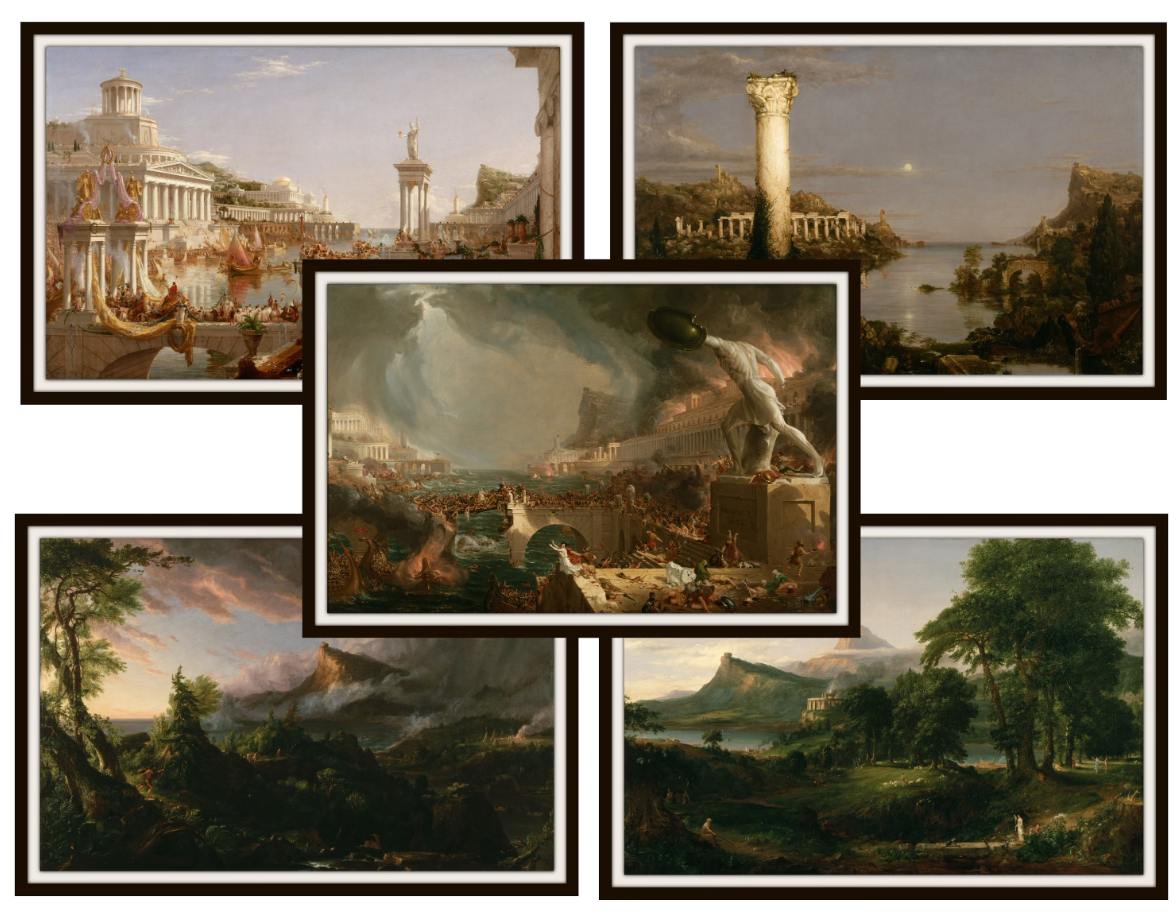
The Course of Empire — Thomas Cole by Alejandro Orradre Medium

Thomas Cole, The Course of Empire Thomas Cole, The Course … Flickr
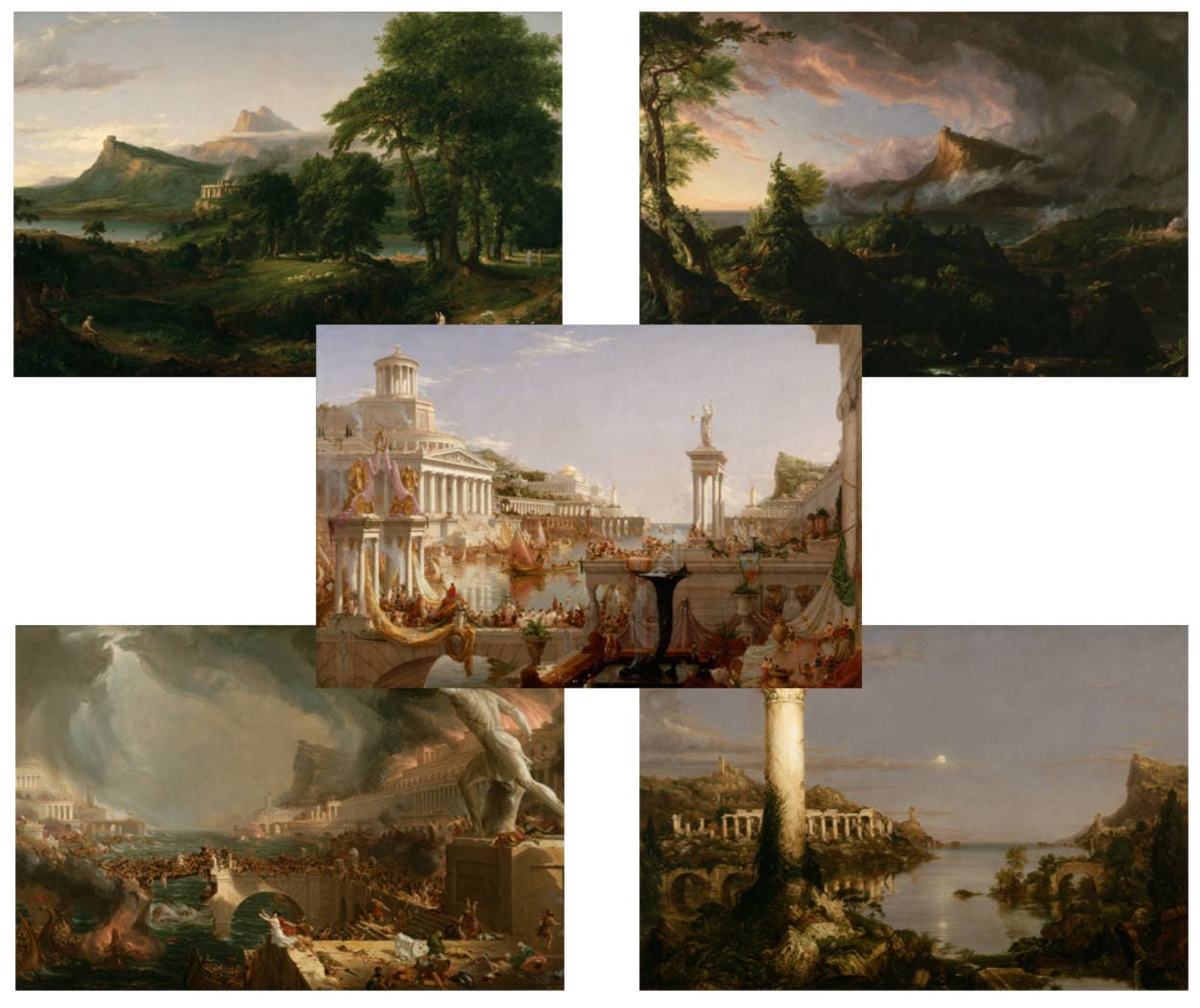
Thomas Cole Course of Empire Complete Set 5 Art Prints 11x17 Etsy

The Course of the Empire The Consummation by Thomas Cole 1836 r
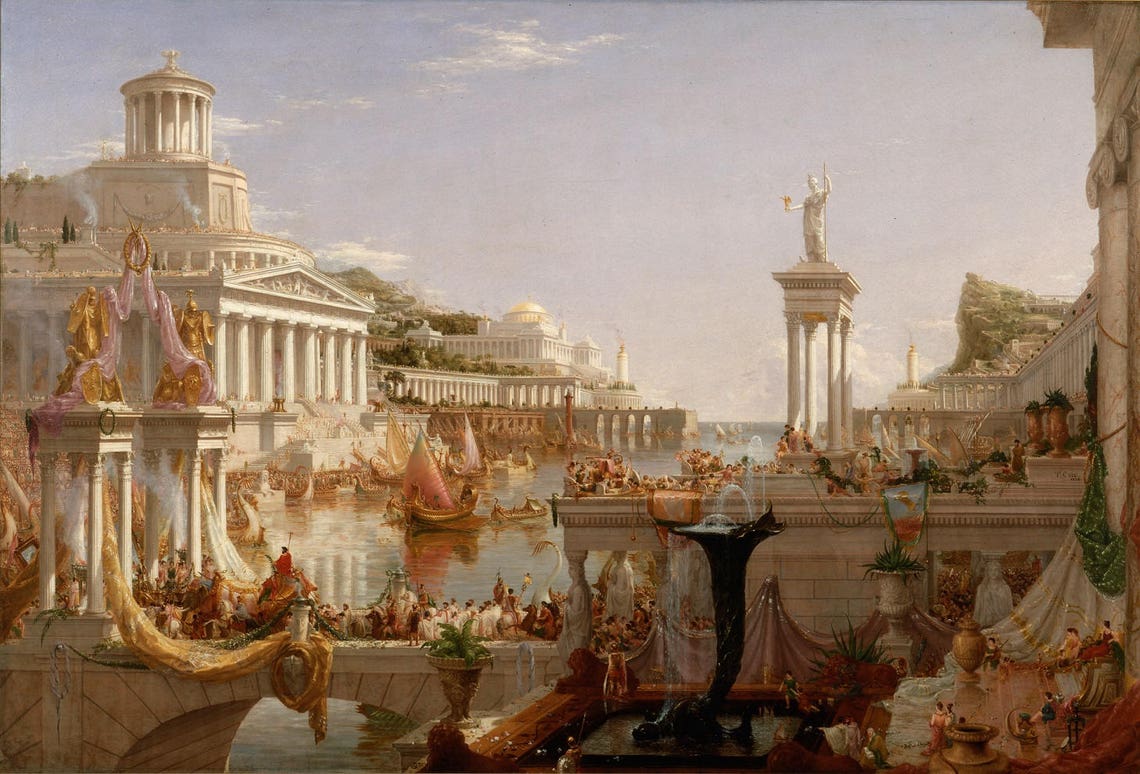
Thomas Cole Course of Empire Complete Set 5 Art Prints 11x17 Etsy
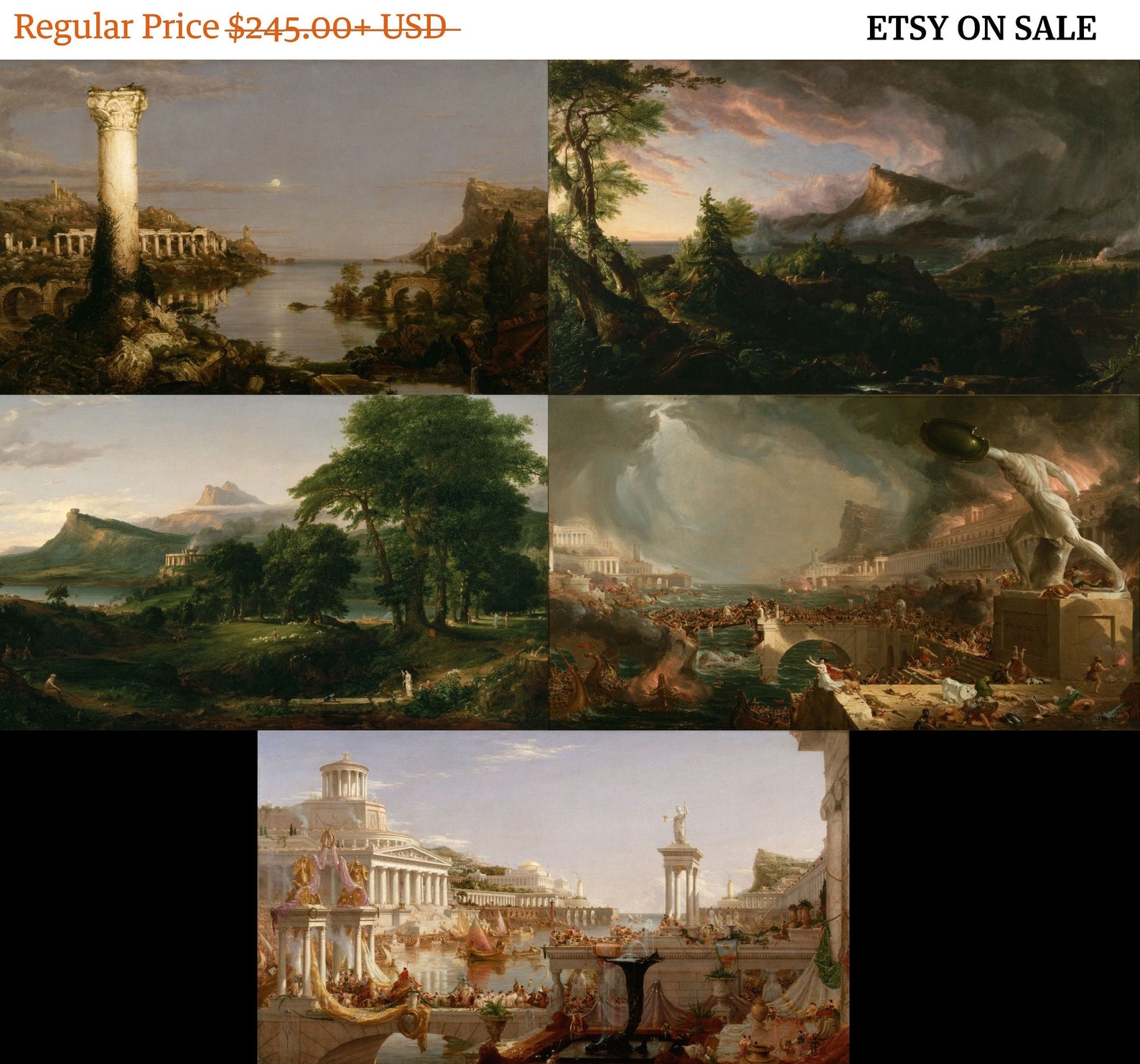
Thomas Cole the Course of the Empire 1836 COMPLETE SET Etsy

Desolation Thomas Cole The Course of Empire Art Print Liberty Maniacs

EL MUSEO DE HIPATIA THOMAS COLE "The Course of Empire" (1836)

Thomas Cole, The Course of Empire Thomas Cole, The Course … Flickr
The Resulting Series Charts The Course Of An Imaginative Empire As It Appears In The Midst Of Wilderness, Expands Into A Glistening Metropolis, And Collapses Into Ruin.
(99.7 × 160.7 Cm) Credit Line:
4.5/5 (4,102 Reviews)
World's Largest Selectionwe Have Everything>80% Items Are New
Related Post: