
Differential Equations Online Course Community College
Differential Equations Online Course Community College - Estimate the solutions of a differential equation using numerical and graphical methods. An introduction to ordinary differential equations and their applications. Classify a differential equation using appropriate mathematical terminology. Ordinary differential equations, including linear equations, systems of equations, equations with variable coefficients, existence and uniqueness of solutions, series solutions, singular points, transform methods, and boundary value problems; It introduces the theoretical aspects of differential equations, including establishing when solution(s) exist, and techniques for obtaining solutions, including, series solutions, singular points, laplace transforms and linear systems. This course is designed to introduce basic theory, techniques, and applications of differential equations. Analyze and solve ordinary differential equations of various types: Separable, exact, linear equations of all orders and systems of linear equations. Separation of variables, linear first order equations, substitution methods, second order linear equations with constant coefficients, undetermined coefficients, variation of parameters, autonomous systems of two first order equations, series. Includes first order differential equations, second and higher order ordinary differential equations with applications and numerical methods. It introduces the theoretical aspects of differential equations, including establishing when solution(s) exist, and techniques for obtaining solutions, including, series solutions, singular points, laplace transforms and linear systems. Differential equations (mat 223) a course primarily in differential equations and related topics. Solve a variety of differential equations using analytical methods. Classify a differential equation using appropriate mathematical terminology. This course is a study of ordinary differential equations, including linear equations, systems of equations, equations with variable coefficients, existence and uniqueness of solutions, series solutions, singular points, transform methods, boundary value problems, and applications. Includes first order differential equations, second and higher order ordinary differential equations with applications and numerical methods. Master techniques including integrating factors, undetermined coefficients, the wronskian, variation of parameters, reduction of order, power series, laplace transforms and numerical approximations. An introduction to ordinary differential equations and their applications. Separation of variables, linear first order equations, substitution methods, second order linear equations with constant coefficients, undetermined coefficients, variation of parameters, autonomous systems of two first order equations, series. This course is designed to introduce basic theory, techniques, and applications of differential equations. Classify a differential equation using appropriate mathematical terminology. Master techniques including integrating factors, undetermined coefficients, the wronskian, variation of parameters, reduction of order, power series, laplace transforms and numerical approximations. Solve a variety of differential equations using analytical methods. Only offered in spring semester and summer ii session. Estimate the solutions of a differential equation using numerical and graphical methods. Math250g with a grade of “c” or higher or with math department approval. Use laplace transform to solve differential equations. Master techniques including integrating factors, undetermined coefficients, the wronskian, variation of parameters, reduction of order, power series, laplace transforms and numerical approximations. It introduces the theoretical aspects of differential equations, including establishing when solution(s) exist, and techniques for obtaining solutions,. Includes first order differential equations, second and higher order ordinary differential equations with applications and numerical methods. Focus on linear differential equations. Separation of variables, linear first order equations, substitution methods, second order linear equations with constant coefficients, undetermined coefficients, variation of parameters, autonomous systems of two first order equations, series. Separable, exact, linear equations of all orders and systems. Topics include differential equations of the first order, linear differential equations of higher orders, systems of differential equations, laplace transforms, numerical methods, and applications. Techniques for solving differential equations of first and higher order; It introduces the theoretical aspects of differential equations, including establishing when solution(s) exist, and techniques for obtaining solutions, including, series solutions, singular points, laplace transforms and. Analyze and solve ordinary differential equations of various types: Only offered in spring semester and summer ii session. Ordinary differential equations, including linear equations, systems of equations, equations with variable coefficients, existence and uniqueness of solutions, series solutions, singular points, transform methods, and boundary value problems; Solve a variety of differential equations using analytical methods. It introduces the theoretical aspects. Estimate the solutions of a differential equation using numerical and graphical methods. Solve a variety of differential equations using analytical methods. Includes first order differential equations, second and higher order ordinary differential equations with applications and numerical methods. Use laplace transform to solve differential equations. Describe the qualitative behavior of the solutions of a differential equation. Separation of variables, linear first order equations, substitution methods, second order linear equations with constant coefficients, undetermined coefficients, variation of parameters, autonomous systems of two first order equations, series. The student applies mathematical concepts and principles to identify and solve problems presented through informal assessment, such as oral communication among students and between teacher and students. Separation of variables, linear. Topics include differential equations of the first order, linear differential equations of higher orders, systems of differential equations, laplace transforms, numerical methods, and applications. An introduction to ordinary differential equations and their applications. Classify a differential equation using appropriate mathematical terminology. Use laplace transform to solve differential equations. Describe the qualitative behavior of the solutions of a differential equation. Master techniques including integrating factors, undetermined coefficients, the wronskian, variation of parameters, reduction of order, power series, laplace transforms and numerical approximations. An introduction to ordinary differential equations and their applications. Solve a variety of differential equations using analytical methods. Ordinary differential equations, including linear equations, systems of equations, equations with variable coefficients, existence and uniqueness of solutions, series solutions,. Use laplace transform to solve differential equations. Includes first order differential equations, second and higher order ordinary differential equations with applications and numerical methods. This course provides an introduction to topics involving ordinary differential equations. Estimate the solutions of a differential equation using numerical and graphical. Classify a differential equation using appropriate mathematical terminology. Solve a variety of differential equations using analytical methods. Topics include differential equations of the first order, linear differential equations of higher orders, systems of differential equations, laplace transforms, numerical methods, and applications. This course is designed to introduce basic theory, techniques, and applications of differential equations. This course provides an introduction to topics involving ordinary differential equations. Total 3 hours per week. Master techniques including integrating factors, undetermined coefficients, the wronskian, variation of parameters, reduction of order, power series, laplace transforms and numerical approximations. Focus on linear differential equations. Math250g with a grade of “c” or higher or with math department approval. Describe the qualitative behavior of the solutions of a differential equation. Differential equations (mat 223) a course primarily in differential equations and related topics. The student applies mathematical concepts and principles to identify and solve problems presented through informal assessment, such as oral communication among students and between teacher and students. This course is a study of ordinary differential equations, including linear equations, systems of equations, equations with variable coefficients, existence and uniqueness of solutions, series solutions, singular points, transform methods, boundary value problems, and applications. Separation of variables, linear first order equations, substitution methods, second order linear equations with constant coefficients, undetermined coefficients, variation of parameters, autonomous systems of two first order equations, series. Techniques for solving differential equations of first and higher order; Estimate the solutions of a differential equation using numerical and graphical methods. Includes first order differential equations, second and higher order ordinary differential equations with applications and numerical methods.
Differential Equation Assignment 1 Studocu

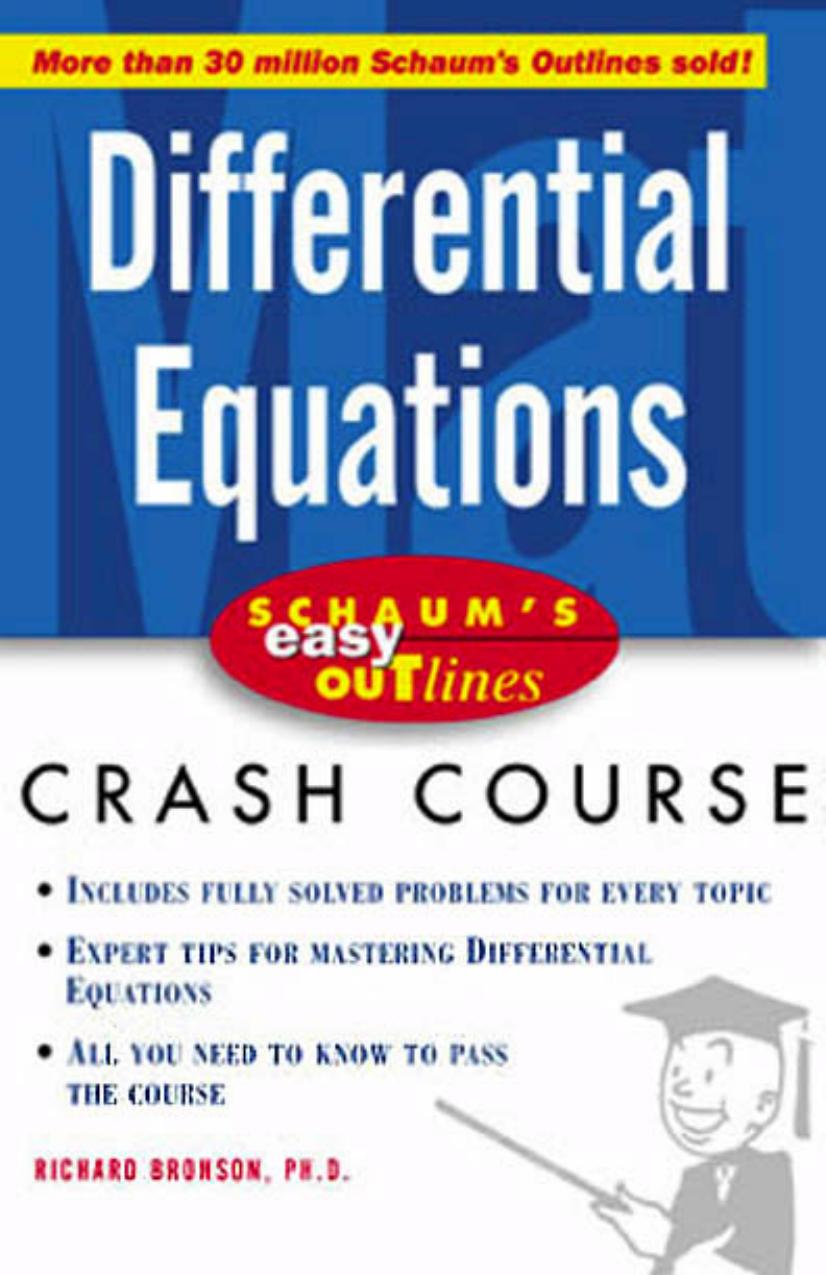
Differential Equations Crash Course As Much As You Can Possibly Learn

Differential Equations Full Review Course Online Crash Course YouTube
Differential Equations Online College Course at Maria Burgess blog

DIFFERENTIAL EQUATION 1 ONLINE LECTURES, STUDY MATERIAL,YEAR SOLVE

Differential Equations Complete Review Course Online Crash Course

The Best Differential Equations Online Courses Venture Lessons
Differential Equations Online College Course at Maria Burgess blog

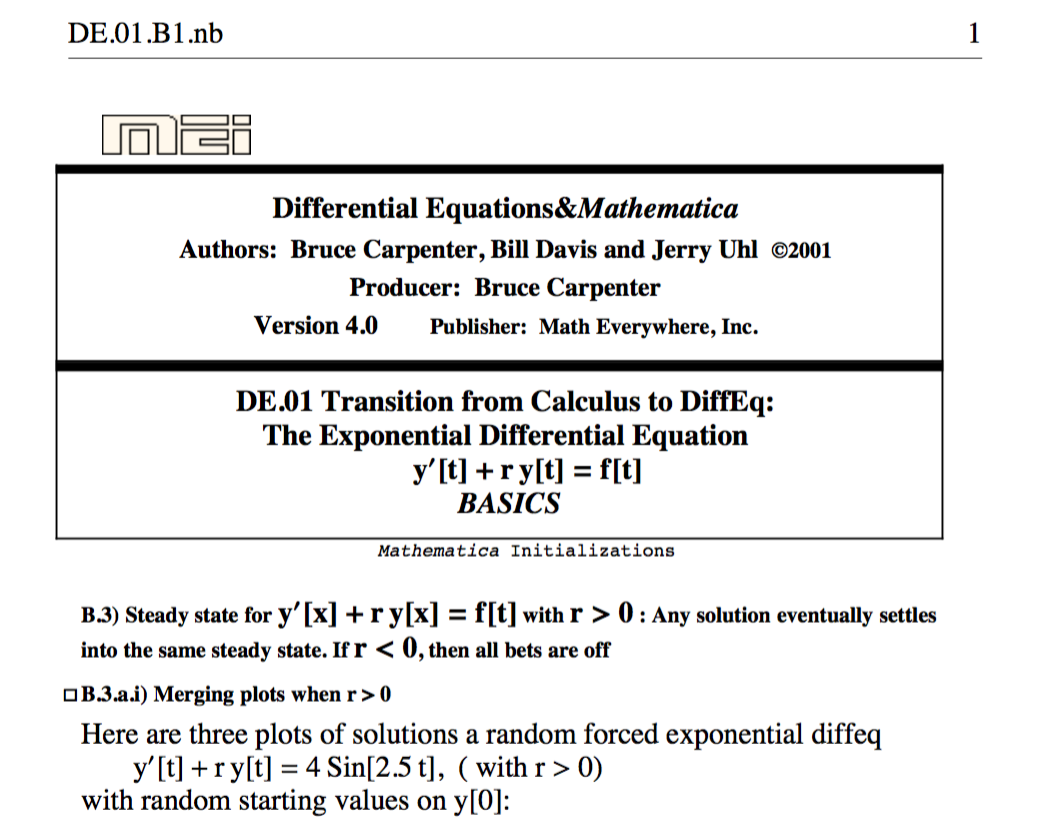
Differential Equations Online College Course at Maria Burgess blog
[Solved] Solve the given differential equation by separation of
Classify A Differential Equation Using Appropriate Mathematical Terminology.
Describe The Qualitative Behavior Of The Solutions Of A Differential Equation.
Only Offered In Spring Semester And Summer Ii Session.
Solve A Variety Of Differential Equations Using Analytical Methods.
Related Post: